

Smart Data in Action
The Missing Layer in Smart Data: Relationship Management for Individuals.
Much of the discussion around Smart Data focuses on data portability, interoperability and the economic benefits of enabling data to move more freely between organisations.
These are important objectives. Better use of data has the potential to unlock innovation, improve services, increase competition and drive economic growth.
But for Smart Data to fulfil that promise, it must land meaningfully for millions of individuals, households and the organisations they interact with every day.
In this article we explore Smart Data from the perspective of individuals and households. In a follow-up piece we will look at the organisational perspective.
The Reality of Modern Digital Life
Imagine trying to actively manage over one hundred digital relationships.
Your bank.
Your insurer.
Your energy provider.
Your mobile network.
Your employer.
Your GP.
Your pension provider.
Your supermarket.
Your children's schools.
Your streaming subscriptions.
Your loyalty programmes.
Your travel providers.
Your smart devices.
For many households, this is already reality.
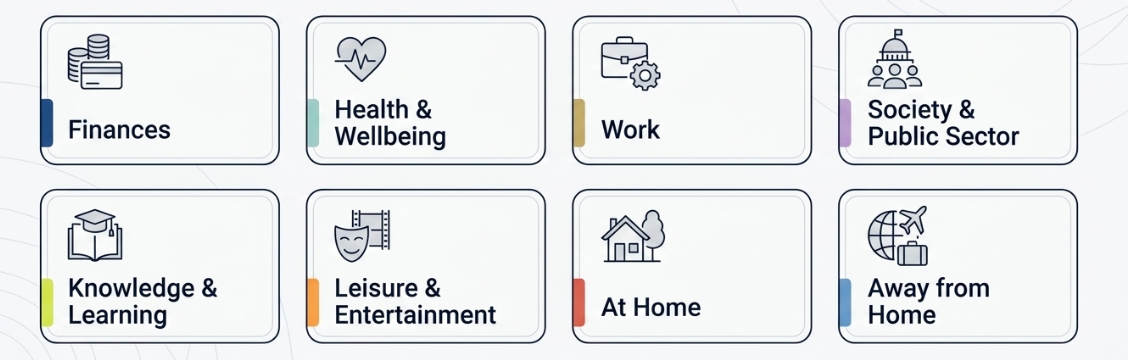
Each relationship comes with its own account, login credentials, privacy policy, terms and conditions, communication preferences and methods of managing data.
Some relationships are important and long-term. Others are temporary and transactional. Many continue to exist long after they have ceased to provide meaningful value.
Yet despite the growing importance of these digital relationships, individuals are still expected to manage them largely through disconnected websites, apps and customer portals.
This is where Smart Data has the potential to make a real difference.
Starting With Outcomes, Not Data
The traditional Smart Data narrative often begins with the movement of data.
Data is locked away.
Data is difficult to access.
Data needs to be made portable.
While all of this is true, it is not how most people think.
Most individuals are not trying to move data.
They are trying to get things done.
In other words, they have jobs to be done.
Viewed through that lens, the question becomes:
Can Smart Data help me achieve better outcomes?
For example:
Get things done more conveniently?
Complete tasks faster?
Reduce costs?
Reduce risk?
Make better decisions?
Achieve better outcomes for myself and my family?
If Smart Data cannot help individuals achieve these goals, then its wider economic promise will remain difficult to realise.
Understanding Our Relationship Landscape
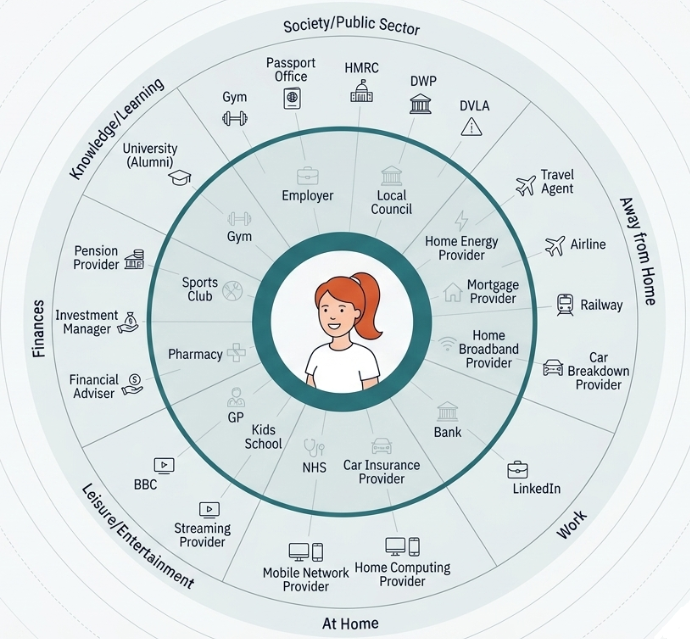
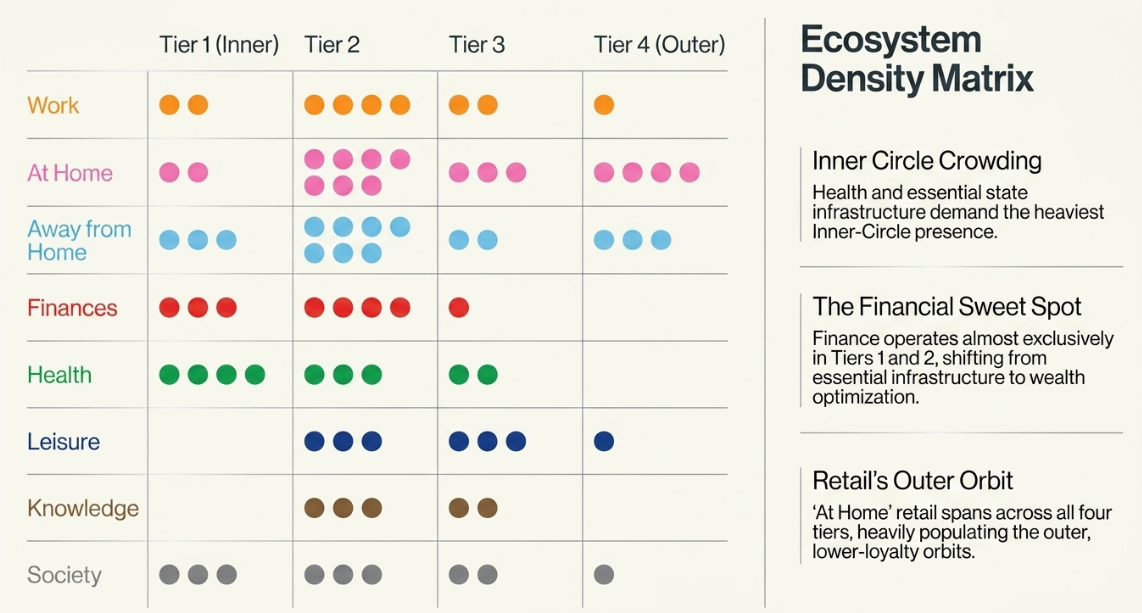
Based on long-term research, observation and practical experience, we believe most individuals and households are managing a surprisingly large number of relationships at any one time.
These relationships tend to cluster around a number of life domains including finance, health, utilities, retail, education, travel, work and government services.
However, not all relationships are equal.
Some matter far more than others.
We find it useful to think about relationships in four broad tiers.
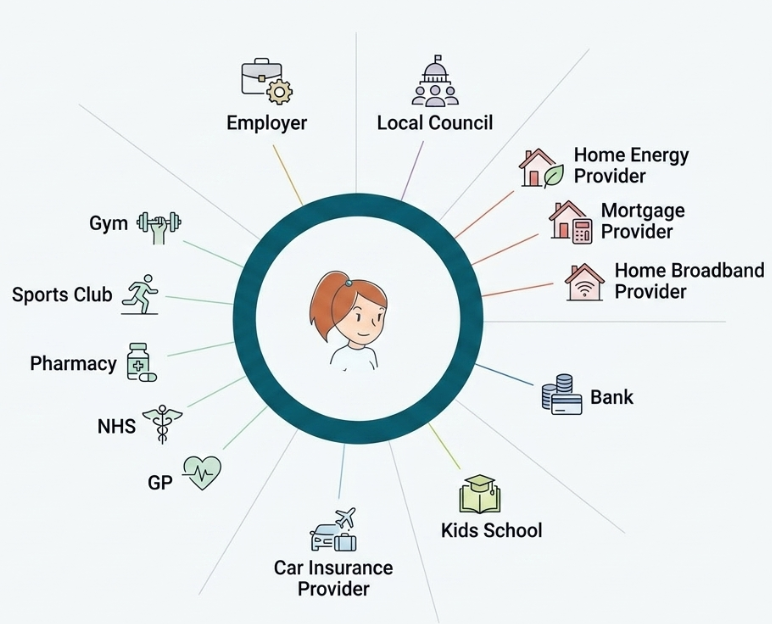
Tier One: The Inner Circle
These are the relationships that must work well if day-to-day life is to run smoothly.
They may include current banking providers, employers, healthcare providers, utilities, key subscriptions and other critical services.
Typically, individuals may have 20-30 such relationships.
These relationships benefit from trusted, ongoing and often automated data sharing arrangements that reduce friction and improve outcomes for both parties.
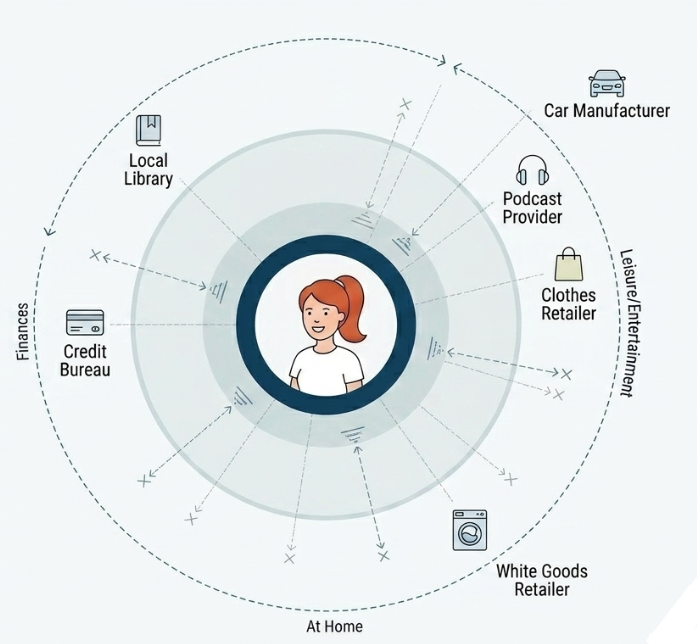
Tier Two: Important Connections
These relationships remain valuable but are not necessarily active every day.
They may include insurers, investment providers, retailers, travel providers and specialist service providers.
Another 20-30 relationships can easily fall into this category.
Here, data sharing is likely to be more situational, with information exchanged when needed rather than continuously.
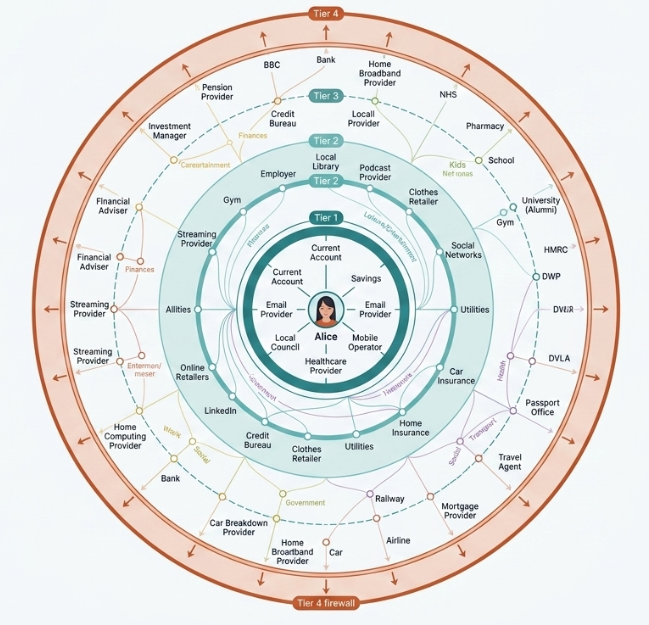
Tier Three: Tactical Relationships
These are shorter-term interactions created to achieve a specific objective.
Examples might include comparison services, event registrations, temporary suppliers or one-off purchases.
These relationships serve a purpose but should not necessarily persist indefinitely.
Smart Data should make them easier to establish and easier to close down once the task is complete.
Tier Four: Unknown or Unwanted Relationships
These are perhaps the most problematic.
They are relationships that individuals may not know exist, may have forgotten about, or may no longer wish to maintain.
The role of future relationship management tools should be to identify, reduce and ultimately eliminate these unwanted connections wherever possible.
The Missing Layer in Smart Data
Stepping back, a broader pattern begins to emerge.
For decades, organisations have invested heavily in Customer Relationship Management (CRM) systems.
These platforms help businesses manage thousands or millions of customer relationships.
Individuals, however, have no equivalent.
Yet they increasingly face the opposite challenge.
Rather than managing one organisation and many customers, they are managing one household and many organisations.
As Smart Data matures, individuals will need their own relationship management tools.
Tools that help them understand:
Who they have relationships with
What products and services they have
What permissions have been granted
What information has been shared
What outcomes they are trying to achieve
Which relationships are creating value and which are not
In many ways, Smart Data is creating the conditions for a new category of capability: Trusted Relationship Management.
Smart Data and the Age of AI
The emergence of AI makes this challenge even more important.
Today, individuals are still expected to navigate much of this complexity themselves.
Tomorrow, trusted digital assistants and AI agents will increasingly act on their behalf.
They will compare services.
Update details.
Complete applications.
Manage subscriptions.
Search for better offers.
Coordinate information across multiple providers.
For these systems to operate safely and effectively, they will require access to trusted, permissioned and auditable data relationships.
In many respects, Smart Data provides part of the foundation upon which these future services can be built.
Bringing Trusted Relationship Management to Life
At DataPal, we believe this points towards a future where individuals have access to dedicated relationship management tools of their own.
Tools that help them focus on their most important relationships, maintain trust, understand what information has been shared and improve outcomes over time.
While significant technical infrastructure sits behind the scenes, the objective is simple:
To help people manage their digital relationships more effectively.
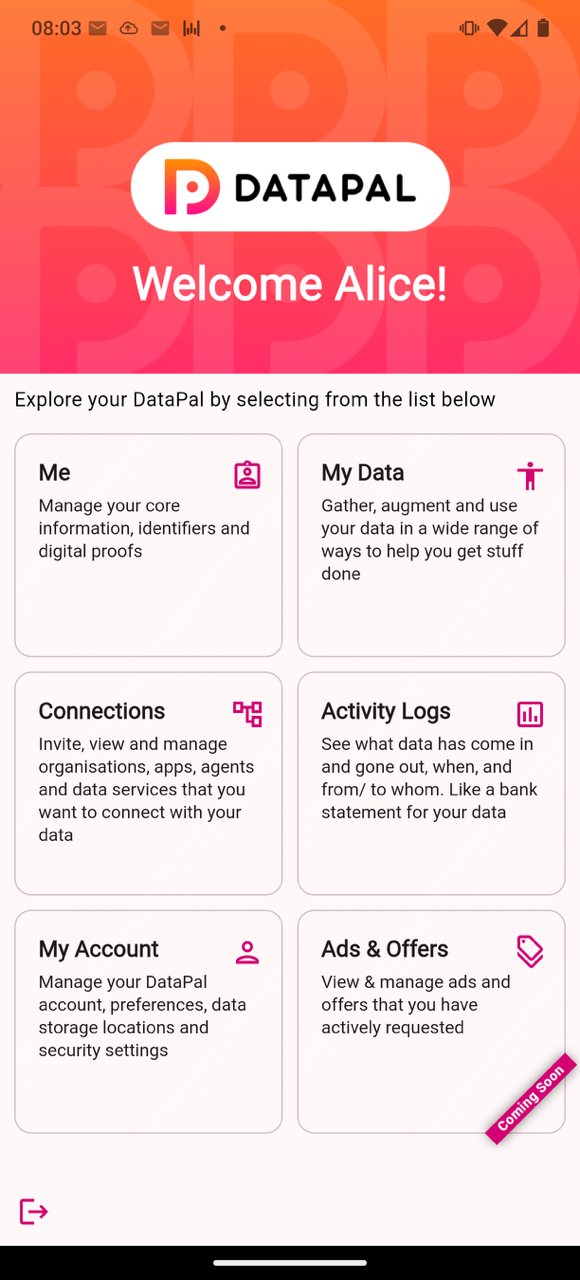
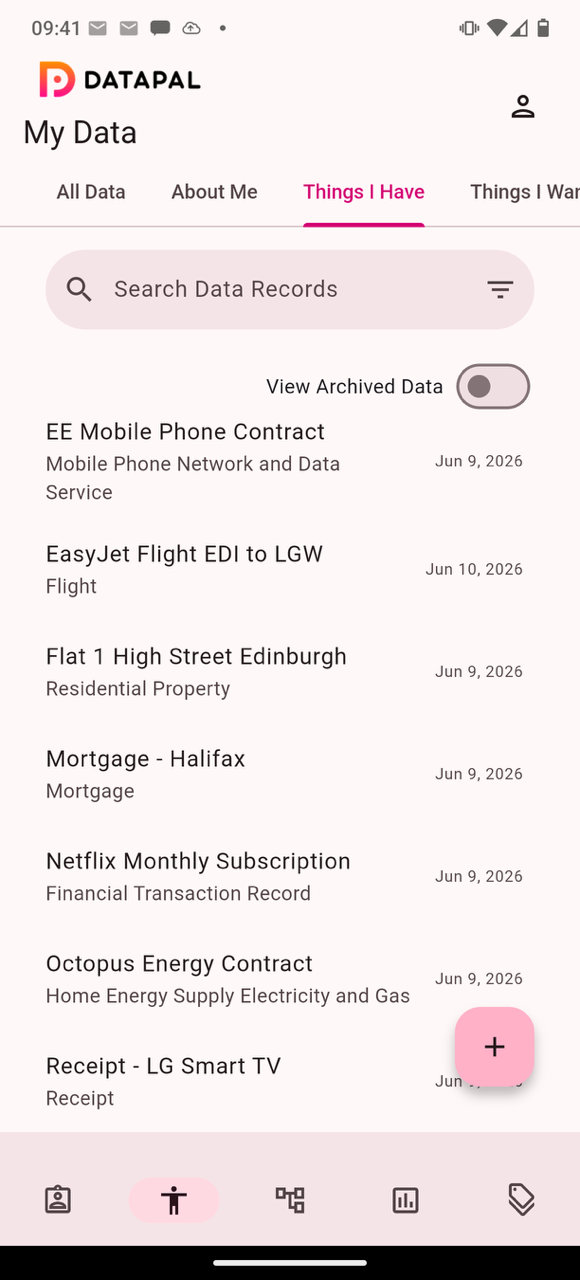
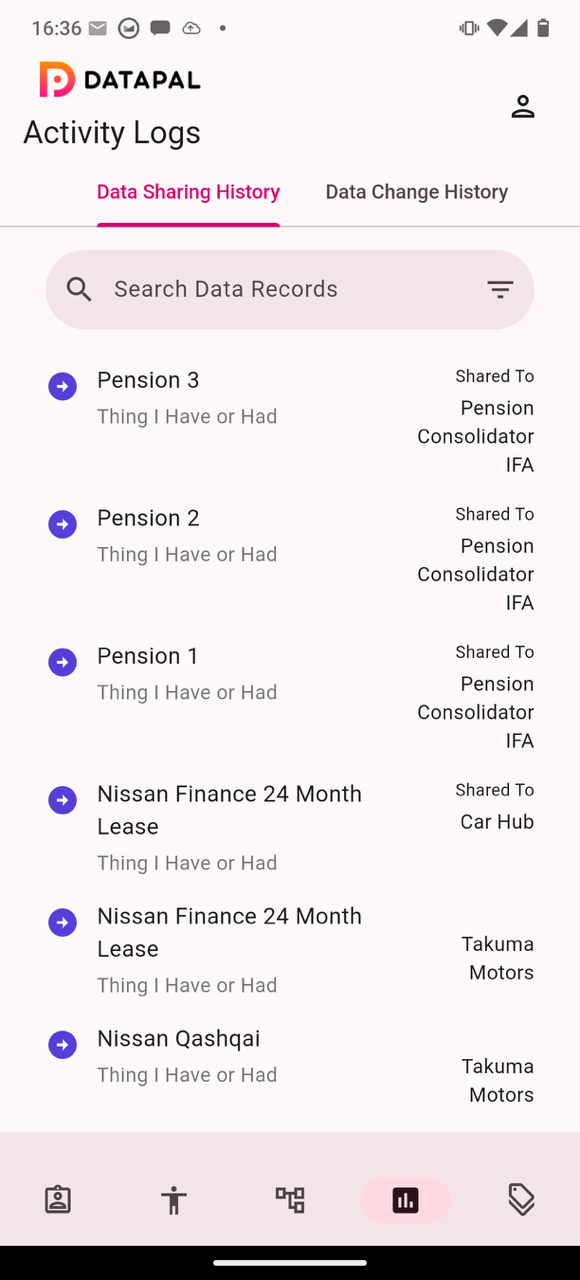
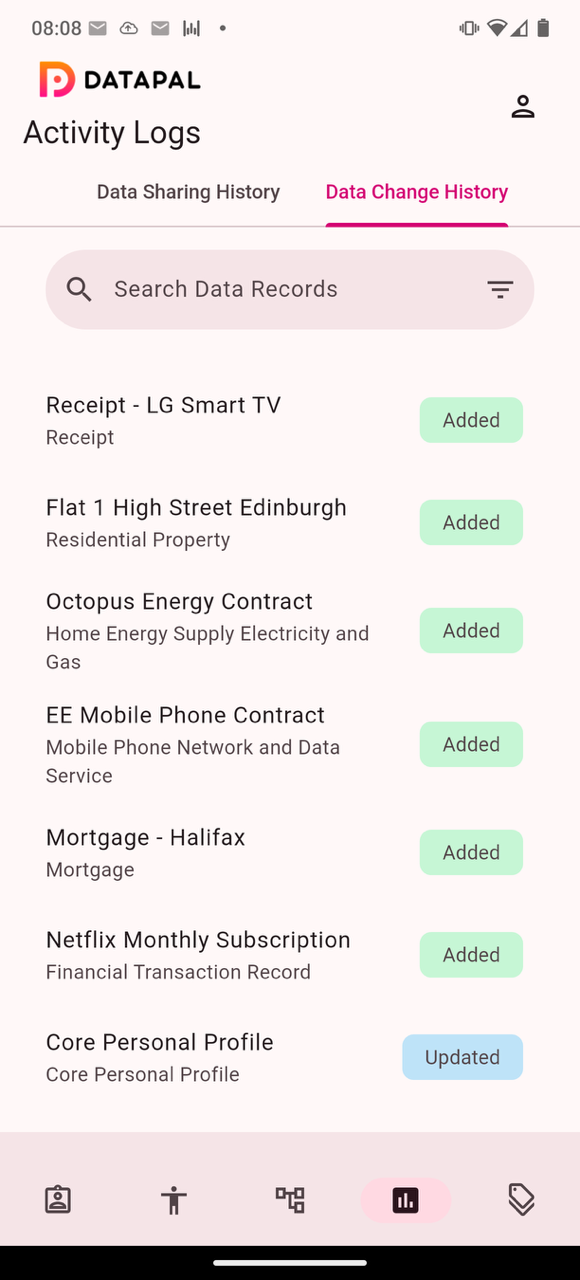
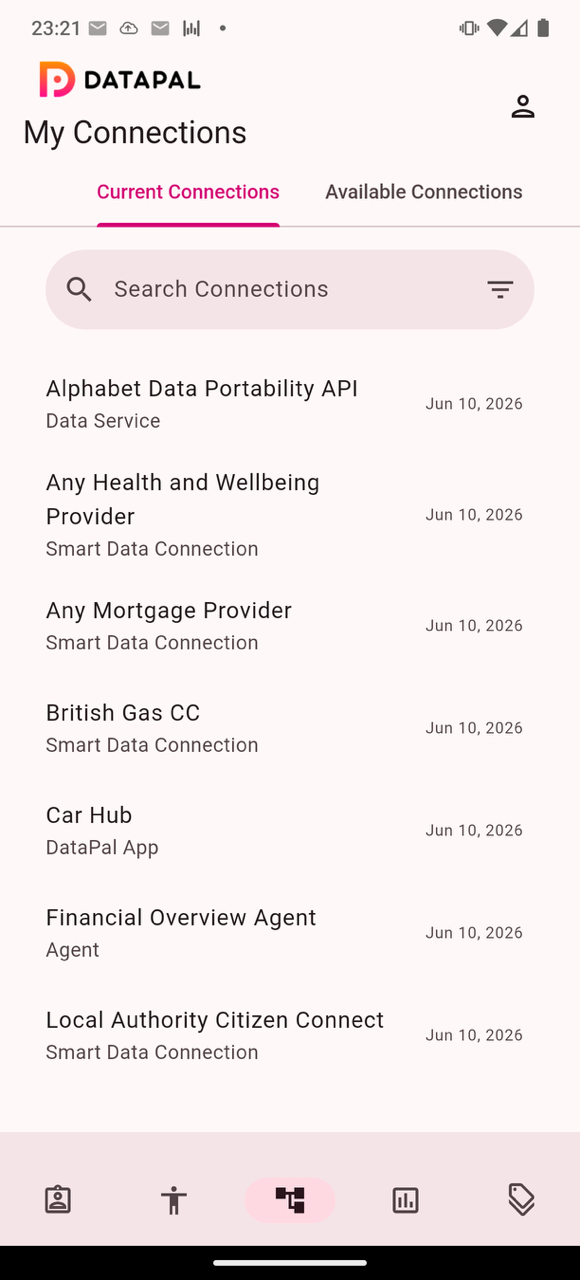
The screenshots below are taken from the forthcoming DataPal Alpha service and illustrate some of the capabilities required to support this vision, including:
Relationship management
Connection management
Data sharing history
Data change history
Products and services management
Ultimately, Smart Data is not really about data.
It is about helping people achieve better outcomes through better relationships.
CRM transformed how organisations manage customer relationships.
The next evolution may be enabling individuals and households to manage theirs.
It remains early days for this concept, but we believe Trusted Relationship Management has the potential to become an important new layer in the Smart Data ecosystem, sitting at the intersection of customer experience, digital identity, data portability and the emerging age of AI.
Footnote and a Call to Action
If you are:
Designing smart data schemes
Regulating data exchange
Building platforms or AI systems
Then the question is NOT:
“How do we implement another scheme?”
But:
“Are we building towards a network or away from one?”
We’re currently partnering with a small number of Organisations and Partners to explore these ideas through targeted proofs of concept. If you’re thinking seriously about the future of Smart Data, AI, and individual data control, we’d be interested in hearing from you.