

If You Don’t Know What Your AI Agent Has Done, Then You Don’t Know What Your AI Agent Has Done
AI Agents are moving faster than governance frameworks can keep up.
AI Agents are quickly evolving from assistants into actors.
They are already booking appointments, making recommendations, comparing products, generating content, moving information between systems and increasingly making decisions on behalf of individuals and organisations.
The benefits are obvious.
More automation.
More speed.
Lower cost.
Better customer experiences.
But as organisations race to deploy AI Agents, a more difficult question is emerging:
How do we know what the Agent actually did?
Because when AI Agents begin acting on behalf of people, using personal data, interacting with organisations and triggering real-world outcomes, governance can no longer be optional.
It becomes infrastructure.
The Missing Layer in AI Agent Development
Most AI Agent conversations focus on:
Models
Memory
Tools
Orchestration
Multi-agent systems
Performance
Far fewer conversations focus on:
Permission
Data provenance
Data quality
Transparency
Auditability
Human oversight
Burden of proof
Yet these questions matter enormously.
What types of personal data were accessed?
Where did the data come from?
Which permissions were used?
Who received the information?
What actions were taken?
Which organisations were involved?
Can those actions be verified later?
Without answers to these questions, AI Agents risk becoming black boxes operating with increasing levels of autonomy.
And black boxes do not scale trust.
AI Agents Create New Governance Challenges Across The Business
This is not simply an engineering problem. AI Agents touch almost every function inside an organisation.
Privacy & Data Protection Teams
Need evidence that permissions were respected and personal data was handled appropriately.
Compliance & Risk Functions
Need verifiable proof that processes were followed and obligations met.
Information Security Teams
Need visibility into how data moved, who accessed it and where it travelled.
Marketing & Sales Teams
Need confidence that AI-driven personalisation remains trusted and permissioned.
Operations & Fulfilment Teams
Need traceability when things go wrong.
Innovation & R&D Teams
Need governance frameworks that accelerate deployment rather than slow it down.
The challenge is no longer simply: Can we build AI Agents? It is increasingly: Can we govern them?
Trust Requires More Than Good Intentions
Trust is often discussed as an outcome.
But for AI Agents, trust becomes a technical requirement.
Trust requires:
Permission: Clear authority and guardrails for what an Agent can and cannot do.
Transparency: Visibility into actions taken and data used.
Auditability: The ability to reconstruct decisions and actions afterwards.
Verifiable Proof: Evidence that policies, permissions and contracts were respected.
Without these capabilities, organisations will struggle to demonstrate accountability when customers, regulators, partners or internal stakeholders ask difficult questions.
The Emerging Need For Agent Action Logs
Humans receive receipts for important actions.
AI Agents may need them too.
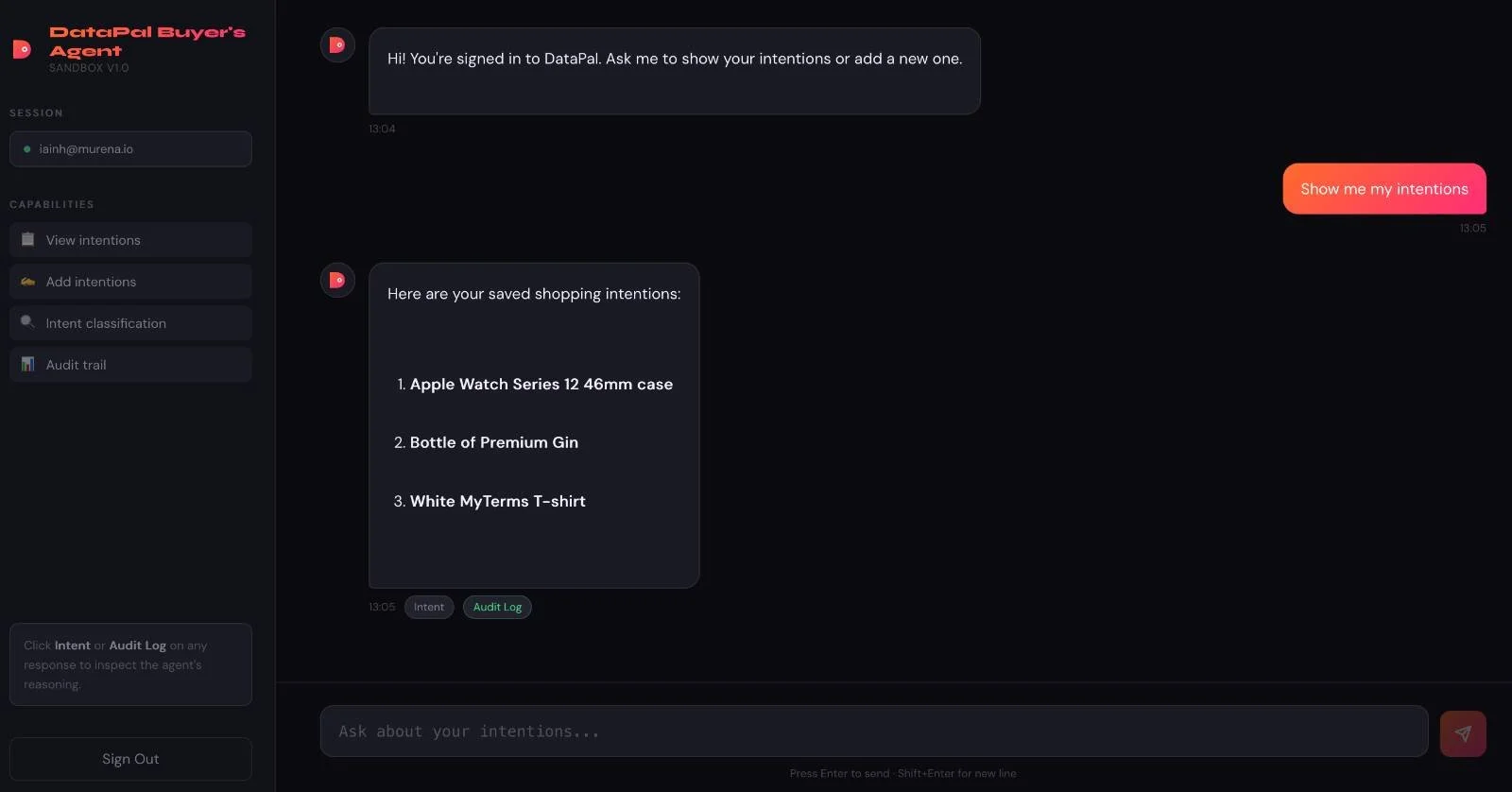
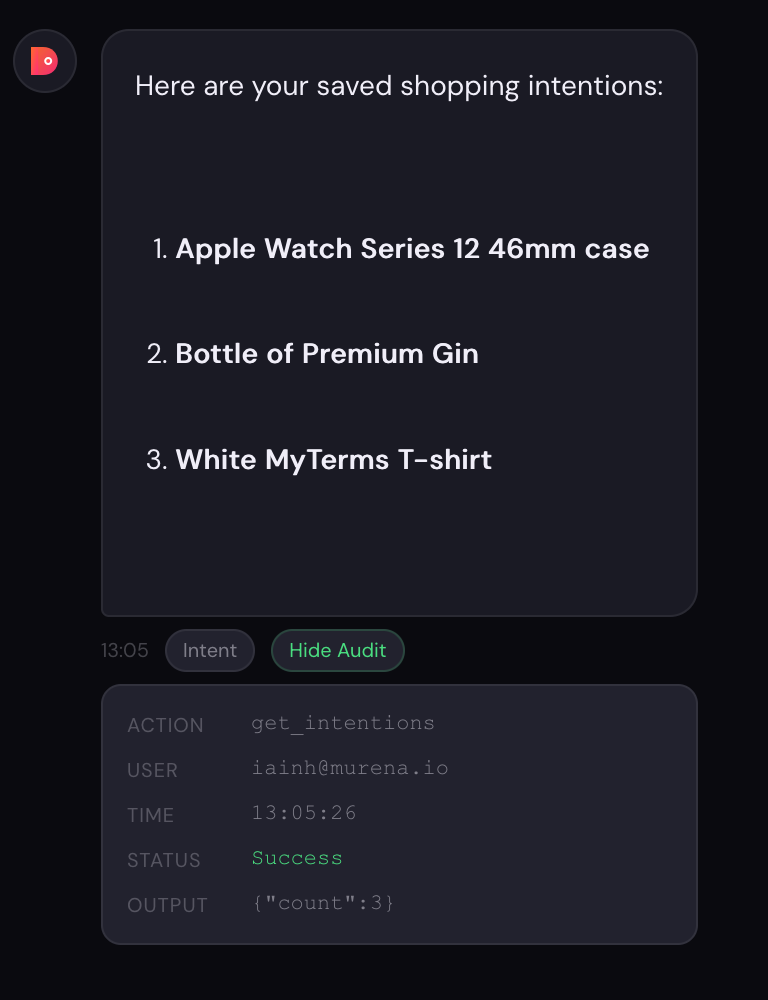
Imagine if every meaningful Agent interaction generated machine-readable evidence showing:
Who initiated an action
Which permissions existed
What data was accessed
Which organisations participated
What outputs were created
When activity occurred
What contractual terms applied
Not simply logs.
Portable, verifiable records of trust.
As AI ecosystems become increasingly interconnected, these forms of proof infrastructure may become as important as the Agents themselves.
Building Trusted Data Relationships For The Age Of AI
The future of AI Agents is unlikely to be determined solely by model quality.
It will instead be determined by who creates the most trusted systems.
Because autonomous systems operating without transparency create friction.
Trusted systems create adoption.
This is where concepts such as machine-readable permissions, portable identity, personal data governance and trusted data relationships become increasingly important.
Not because they slow AI down.
Because they enable AI to scale responsibly.
A Question For AI Builders
As your AI Agents become more capable, ask a simple question:
If something goes wrong tomorrow — can you prove what your Agent did today?
Because if you do not know what your AI Agent has done,
then you do not know what your AI Agent has done.
Footnote and a Call to Action
If you are:
Designing smart data schemes
Regulating data exchange
Building platforms or AI systems
Then the question is NOT:
“How do we implement another scheme?”
But:
“Are we building towards a network or away from one?”
We’re currently partnering with a small number of Organisations and Partners to explore these ideas through targeted proofs of concept. If you’re thinking seriously about the future of Smart Data, AI, and individual data control - we’d be interested in hearing from you.